
Regional guide · Florida
Bulkheads & Seawalls in Southwest Florida
Seawalls in Cape Coral, Fort Myers, Naples, Marco Island and Punta Gorda: canal systems, tides, hurricane surge history and the permits that commonly apply.
Last reviewed by the Bulkhead Walls Editorial Team
Overview
Southwest Florida's waterfront is dominated by dredged residential canals, the tidal Caloosahatchee River and Charlotte Harbor, where tide ranges are small but hurricane surge can be large. Hurricane Ian in 2022 produced 6 to 15 feet of inundation along parts of this coast. Seawall work commonly involves state, federal and city or county review.
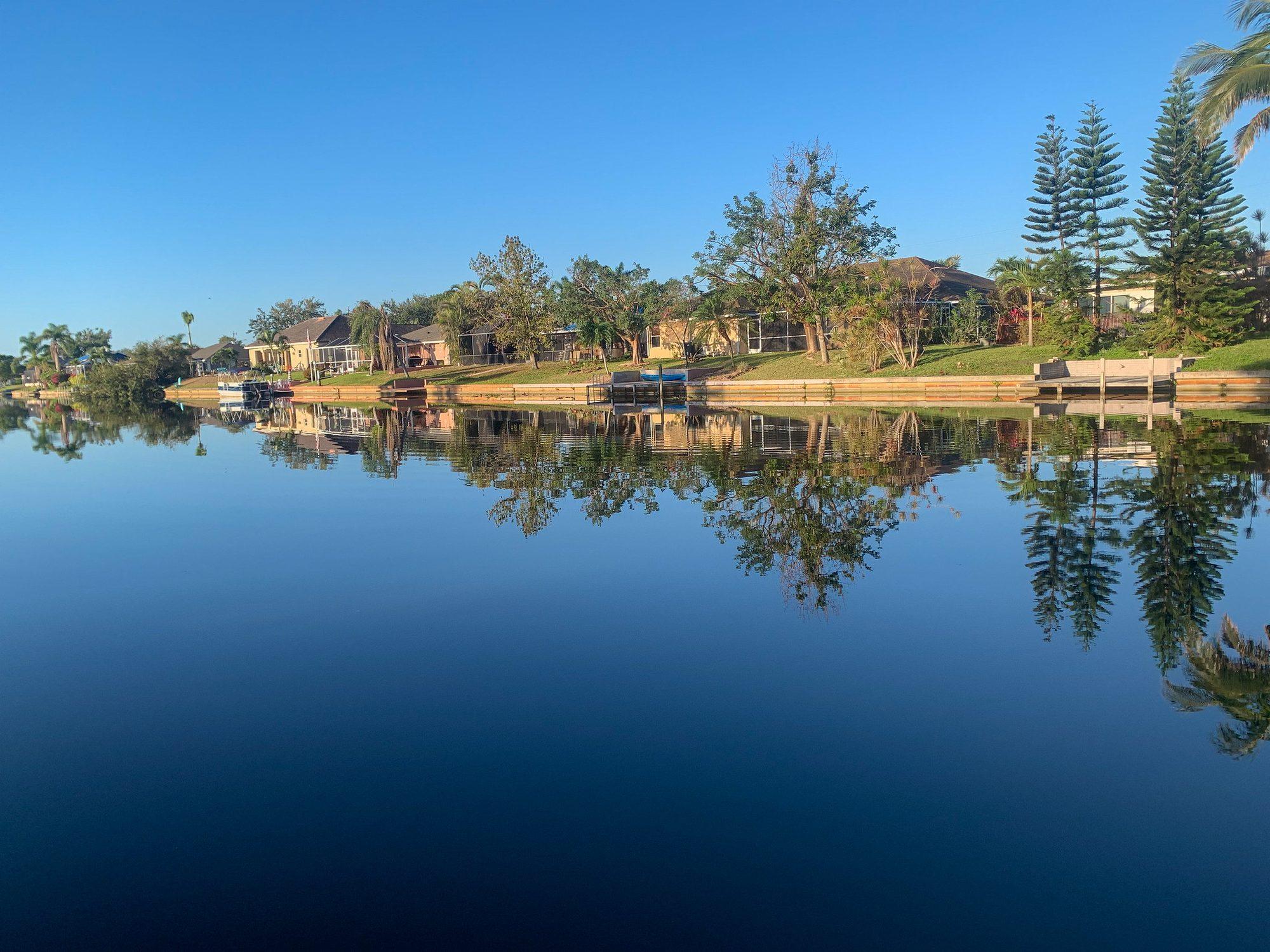
- Communities covered
- Cape Coral, Fort Myers, Naples, Marco Island, Punta Gorda
- Waterbodies
- Caloosahatchee River, Charlotte Harbor, Estero Bay, Naples Bay, Gulf of Mexico, Cape Coral canal system
- Water types
- saltwater, brackish, freshwater, tidal
- Wall types documented
- Precast concrete seawalls (Cape Coral standard detail), Vinyl sheet forms with cast-in-place concrete (Cape Coral standard details)
Key local considerations
- Cape Coral reports more than 400 miles of canals, including about 300 linear miles of freshwater canals.
- Cape Coral states that seawalls are not required on freshwater canals and has a separate permit guideline for alternative seawalls there.
- New Cape Coral seawalls, and replaced portions of existing ones, must meet the city's engineering design standards.
- Mean tide range is under one foot at Fort Myers and about two feet at Naples, per NOAA datums.
- Hurricane Ian (2022) produced storm surge that reversed the flow of the Caloosahatchee River at Fort Myers.
Much of Southwest Florida's developed waterfront sits on canals dug for development rather than on natural shoreline. That history shapes how walls are built, how they are loaded and how they are permitted. This page covers the Caloosahatchee River and Charlotte Harbor south through Naples and Marco Island.
The waterfront environment
Cape Coral's canal system
The City of Cape Coral describes its canals as the signature feature of a master-planned community begun in 1958. Canals were dredged and the material was used to raise building lots. The city now reports more than 400 miles of waterways. About 300 linear miles are freshwater canals that hold stormwater and release it gradually to tidal canals. In the saltwater canal areas, runoff goes directly to tide.
That split matters for walls. The city states that seawalls are not required for properties on freshwater canals. Its permit guideline for alternative seawalls applies to residential properties on fresh water. Saltwater canal lots are where vertical seawalls are the norm.
Rivers, bays and the Gulf
Fort Myers fronts the tidal Caloosahatchee River. Punta Gorda sits on Charlotte Harbor. Farther south, Estero Bay, Naples Bay and the passes around Marco Island connect canal communities to the Gulf of Mexico.
Small tides, large surge
Daily tides here are modest. NOAA tidal datums give a mean range of about 0.9 feet at Fort Myers, 0.8 feet at the Cape Coral Bridge, 2.0 feet at Naples and 2.2 feet at Caxambas Pass on Marco Island. With little daily fluctuation, a wall's structural test usually comes from storms, heavy rain and long-term deterioration rather than tide alone.
Storm history
The National Hurricane Center's reports document repeated surge along this coast:
| Storm | Reported inundation (above ground level) |
|---|---|
| Hurricane Irma, 2017 | Final landfall near Marco Island; 3 to 5 feet from Marco Island through Naples to Fort Myers |
| Hurricane Ian, 2022 | 10 to 15 feet on Fort Myers Beach; 8 to 12 feet from Estero to North Naples; 6 to 9 feet in Cape Coral, Pine Island and Naples; 5 to 8 feet up the Caloosahatchee in Fort Myers; 4 to 6 feet from Marco Island to Everglades City |
| Hurricane Milton, 2024 | 3 to 5 feet from Bonita Beach through Marco Island; 6 to 9 feet from Venice to Boca Grande |
NHC noted that Ian's surge reversed the direction of the Caloosahatchee's flow and flooded downtown Fort Myers streets. After an event like this, walls can be overtopped, lose backfill and show new cracking or movement. See signs of bulkhead failure and why a yard sinks behind a seawall for what to look for.
Wall types documented in the region
Cape Coral's public works standards include three council-approved seawall details: a precast concrete seawall, a flat vinyl form with cast-in-place concrete, and a corrugated vinyl form with cast-in-place concrete. The city's residential guideline allows applicants to use these city standards or signed and sealed engineered plans. We have not found comparable published standards for the other communities on this page, so we do not generalize about wall types elsewhere in the region. For material trade-offs, see concrete bulkheads and vinyl bulkheads.
Permitting in Southwest Florida
Seawall work here is commonly reviewed at several levels. Our Permit Navigator lists verified agency pages.
City of Cape Coral
Cape Coral's Permit Document Center publishes separate guidelines for new residential seawalls, seawall repairs and alternative seawalls on fresh water. Points in the city's documents include:
- A city Notice to Industry, effective November 15, 2023, states that new seawalls, and any replaced portion of an existing seawall, must meet the engineering design standards in effect since March 1, 2022. Repairs that do not remove and replace any portion are not held to that standard.
- The residential seawall guideline lists DEP approval or Corps authorization (except for freshwater), a site plan locating the seawall at the property line, and protected-species affidavits.
- Inspections in the guideline include the seawall slab, cap and tieback alignment, and final.
- A floating turbidity screen must enclose the work area during clearing, excavating, jetting and backfilling.
Guidelines change, so confirm current versions with the city before applying.
State and federal review
The Florida Department of Environmental Protection or a water management district may review work in surface waters, and work on state-owned submerged lands can need proprietary authorization. Section 403.813(1), Florida Statutes, includes exemptions for some seawall restoration and for seawalls in artificially created waterways, with conditions. The U.S. Army Corps of Engineers, Jacksonville District, reviews work in waters of the United States. Outside Cape Coral, contact the building department of the city or county where the property sits, such as Fort Myers, Naples, Marco Island, Punta Gorda, Lee County, Collier County or Charlotte County, for local requirements.
Planning a project here
- Confirm whether the lot is on a freshwater or saltwater canal. It changes what is allowed in Cape Coral.
- Ask whether the work is a repair or a replacement. In Cape Coral that decides whether the 2022 design standards apply. Our repair vs. replacement guide covers the engineering side.
- Expect turbidity controls and protected-species checks as part of the job.
- Use the bulkhead permit guide and how to hire a marine contractor to plan the sequence.
This page is educational. The permitting agencies and a licensed marine contractor or engineer determine what a specific property needs.
Frequently asked questions
Does every Cape Coral canal lot need a seawall?
No. The City of Cape Coral states that seawalls are not required on freshwater canals, and it publishes a separate permit guideline for alternative seawalls on fresh water. Saltwater canal lots follow different rules.
What seawall designs does Cape Coral accept?
The city's public works standards include details for precast concrete seawalls and for flat or corrugated vinyl forms with cast-in-place concrete. Applicants can use the city standards or signed and sealed engineered plans.
Do I need state or federal approval for a seawall in Southwest Florida?
Often, depending on the water and the work. Cape Coral's seawall guidelines list DEP approval or Corps authorization for saltwater work. The agencies decide what a specific project needs.
How high did water get during Hurricane Ian?
The National Hurricane Center estimated 10 to 15 feet above ground on Fort Myers Beach, 6 to 9 feet in Cape Coral and Naples, and 5 to 8 feet up the Caloosahatchee in Fort Myers.
Sources
- 1Waterfront Living Guide — City of Cape Coral. Accessed November 3, 2026.
- 2Engineering Design Standards: Public Works — City of Cape Coral. Accessed November 3, 2026.
- 3Notice to Industry: Seawalls (effective November 15, 2023) — City of Cape Coral. Accessed November 3, 2026.
- 4Seawall (with or w/o Concrete Dock) Guideline — Residential — City of Cape Coral. Accessed November 3, 2026.
- 5Permit Document Center — City of Cape Coral. Accessed November 3, 2026.
- 6Marine Improvement (Alternative Seawall) Guideline — Residential — City of Cape Coral. Accessed November 3, 2026.
- 7Tropical Cyclone Report: Hurricane Ian (AL092022) — NOAA National Hurricane Center. Accessed November 3, 2026.
- 8Tropical Cyclone Report: Hurricane Irma (AL112017) — NOAA National Hurricane Center. Accessed November 3, 2026.
- 9Tropical Cyclone Report: Hurricane Milton (AL142024) — NOAA National Hurricane Center. Accessed November 3, 2026.
- 10Datums for 8725520, Fort Myers, FL — NOAA Tides & Currents. Accessed November 3, 2026.
- 11Datums for 8725110, Naples, FL — NOAA Tides & Currents. Accessed November 3, 2026.
- 12Datums for 8724967, Marco Island, Caxambas Pass, FL — NOAA Tides & Currents. Accessed November 3, 2026.
- 13Florida Statutes Section 403.813 — Florida Legislature (Online Sunshine). Accessed November 3, 2026.
Educational guidance only. This information is general and is not a structural assessment, engineering advice, or a permitting determination. Conditions at every waterfront are different; consult a licensed marine contractor or professional engineer about your wall.